Tuesday, July 7, 2020

THE ONE, TWO.THREE, FOUR, ISOLATION COVID BLUES


As I ponder the Covid lockdown, an Elvis song that was popular when I was a kid has been running through my mind.  With apologies to The King, here is my updated rendition. (Now, I just need someone with a guitar and a voice to sing it for me.)

The One, Two, Three, Four Isolation Covid Blues

(sung to the tune of Elvis Presley’s Occupation G.I. Blues - If you don't know the song, do click on the link before reading  my lyrics.)

I live in a house 
with a beautiful garden out back
I live in a house 
with a beautiful garden out back
Gimme a day with friends
To cheer up this sad sack.

I’ve got those one, two, three, four
isolation covid blues
From my uncut hair to the toes of my unworn shoes
And if I don’t see a new face soon
I’m gonna blow my fuse.

We eat healthy meals
at the kitchen table each day
We eat healthy meals 
at the kitchen table each day
I’d blow my whole IRA
For a meal in a restaurant, say.

We’d sure like to help
but all we do here is wait
We’d sure like to help 
but all we do here is wait
And they can’t say how long
We’re gonna be stuck in this state.

I’ve got those one, two, three, four
isolation covid blues
From my uncut hair to the toes of my unworn shoes
And if I don’t see a new face soon
I’m gonna blow my fuse.

I’d meet you today at the beach
but folks won’t wear masks
I’d meet you today at the beach
but folks won’t wear masks
So we’re stuck in the back yard
‘til there’s a vaccine at last.

I’ve got those one, two, three, four
isolation covid blues
From my uncut hair to the toes of my unworn shoes
And if I don’t see a new face soon
I’m gonna blow my fuse.


Wednesday, June 24, 2020

YOU TAKE THE HIGH ROAD AND I'LL STAY AT HOME: Confessions of a Reluctant Traveler

      "East, west, home's best."  - Anne Shirley

It has been over three months since the start of the pandemic lockdown. Even before George Floyd's horrible murder brought thousands into the streets to demonstrate for racial justice, people were starting to chafe.  

I, as a person over the age of concern, have been careful.  I wear a mask when I go to the store and avoid getting close to people who are not doing the same.  


Now, things are starting to open up. People are gathering. People are getting their hair cut.  People are going to restaurants. People will soon be comfortable flying again.  

To be honest, it's the flying-again part that is giving me the most pause. The truth is I am fine with not being able to fly.  I don't love to travel. I know -- many people dream of traveling in retirement.  What can I say?  It is not at the top of my list.  Covid is an excellent excuse not to fly.  

When I told a friend I was going to write about this, she said, "But you travel all the time."  Well, I do travel.  I travel because I want to see friends and family and some of them live 2000- or 3000-miles-away.  I will keep traveling to see them.  I just won't love it.  

When I am away from home, I miss my house, my garden, my bed, my pillow.  By the end of the first week, I am thinking pretty steadily about home.  Yes.  I am a travel wimp.  

Look, I'm not afraid to fly; I just don't like it.  I don't like the crowded seating (and I am a fairly small person - how do large people manage?); I don't like sitting around the airport listening to people speak loudly on their cell phones as if everyone around them were part of the conversation; I don't like airport food; I don't like large airports where you have to take a shuttle to get from one terminal to another.  I don't like arriving somewhere by air and then having to wait in line for a rental car.  

Last September, we flew to Scotland to visit my cousin and for me to do some research for a writing project.  I loved spending time with Judy and her husband.  I loved being in Scotland.  I did not, however, love going without sleep for 24 hours (flight plus time- change).  I can't sleep on a plane. (Who are these people who can sleep on a plane?)  I did not love the jet lag in each direction. I did not love the eight days it took me to feel I was back in my body after arriving home.  When I returned from this trip, I felt that I would probably never fly overseas again.  (The Pacific NW is very far from Europe.)  Of course, as was the case with pregnancy, I am likely to forget the unpleasant parts and repeat the experience.   

And, yes, this is a first-world lament. I know there are those who would give their lives to put their children on a plane to safety.  I would gladly give my seat on a plane to someone who wishes to flee a war-torn place.  I just don't know how to make that happen, other than to donate to international relief organizations. (I am open to other ideas.)

Of course, there are places I still want to see.  At least in theory.  And I am deeply grateful that I have been to Paris and to the Alhambra. But, even when we have taken a trip in search of sun during one of our rainy and gray winters; even when I have enjoyed wearing shorts in February; my favorite part of every trip is always arriving home.  Here's the bottom line.  I am a homebody. When I cross the threshold, I want to rub my back against the walls like a cat.  Everything I love and need is here.  

Except, of course, for those faraway friends and family members.  


Photo by Gerrie van der Walt on Unsplash


Friday, June 12, 2020

THE REMEMBRANCE OF BOOKS PAST; My Life as a Reader (Part II)

This post is dedicated to my book group - Bev, Catherine, Karen, Linda, (and Kay, who is smiling on us from beyond the veil.) Thank you for accompanying me for 30-plus years through the reading of books that we have loved or reviled.  (We certainly have learned not to trust the book-jacket descriptions, haven't we?)

Back in January, I wrote Part I of this post, fully intending Part II to be my next effort.  Instead, the pandemic came along and other topics began to feel more pressing.  Then, when I felt ready to get to part II, a post about books addressing racism niggled at me to be written, and so I put off the second part again.

Now, in order to finish with this topic, I give you Part II.

In Part I, I told you how many books I had read last year.  You might have wondered how I was able to come up with that number.  Well, about three years ago, having noticed that I would forget whether I had read a book or would remember I had read a book but could not remember what it was about, I started keeping a list of the name, author, and a brief description of each book I finished. So, when I wanted to count up how many books I had read last year, I had only to consult my list, which is organized by month and year.  

Once I started keeping this list, I found myself wishing I had begun it when I was 12 or 13 or whenever it was that I moved beyond the young-people's section in the library.  What I wouldn't give for such a list.  So, I decided to take things a step further and try to make a list of all of the books I could remember ever having read.  I know.  I know.  This may seen a bit OCD or even, dare I admit it, nuts.  But, stay with me.  

Of course, there is no way I will ever remember all of the thousands of books I have read in my lifetime.  And, no, I did not sit down and try to do it all at once.  I simply opened a file and every time I remembered a book, I added it.  

And then it got to be a kind of treasure hunt.  In order to prompt my memory, I would periodically, envision myself at a time and place in my life and try to remember what I had been reading.

There I am at 11, reading Anne of Green Gables and all of its sequels.  At 12 or so, I am reading Betty Smith (A Tree Grows in Brooklyn and Maggie-Now).  

Now I see myself at 16, spending the summer reading A Tale of Two Cities and The Scarlet Pimpernel and Mutiny on the Bounty. (My adventure phase).

What was I assigned in high school?  I can remember Seize the Day (Bellow) and The Catcher in the Rye, along with the rest of Salinger's output, and that's about it, although I know there were many, many more.

There I am at 23, curled up in a chair reading Blackberry Winter by Margaret Mead and all of Margaret Drabble.  And, of course, pouring over the feminist bible - Our Bodies Ourselves. A couple of years later, I am sitting in a different chair in a different state reading The Golden Notebook by Doris Lessing and all of Galsworthy's The Forsythe Saga, along with Fear of Flying by Erica Jong and a biography of Zelda Fitzgerald by Nancy Milford. 

In my early thirties, I see myself reading John Nichols and Herman Wouk and and Herman Hesse and Marge Piercy and who else?

Picturing myself in various armchairs in various apartments or houses only got me so far, so I tried other memory prompts. Here are a few of those prompts, with some examples of the books I came up with.

The books I read as a college English major:  All of Henry James, but especially The Portrait of a Lady; Mark Twain and Sinclair Lewis; Balzac and Mann; Fitzgerald and Hemingway.  When I call these authors to mind, I am struck by the fact that we weren't being offered much written by women, and, as I noted in my last post, there was nothing by black or brown authors.  I hope that has changed in nearly 50 years. 

The books I read during college that were not assigned:  The Autobiography of Malcom X; The Liberation of Lord Byron Jones (Jesse Hill Ford).

The books I might not have discovered if not for the voracious readers in my book group:  Telex From Cuba (Rachel Kushner);  Brown Girl Dreaming (Jacqueline Woodson).

The books I pressed on everyone:  How to Change Your Mind (Michael Pollan); Bel Canto (Ann Patchett).

The books I struggled to understand:  Astrophysics for People in a Hurry (Neil DeGrasse Tyson); A Brief History of Time (Stephen Hawkins.

The page turnersPillars of the Earth (Ken Follet): Lonesome Dove (Larry McMurtry).

I won't bore you with further examples.  You get the idea.

Here's the thing.  My life is full.  I do not have time for this project and I have mostly given up on it.  Nor can I recommend that you try it.  

What I do recommend is that you start now to make a list of the books you read as you finish them.  Looking back on the books I have read since I started keeping my list three years ago, I can see how one book led to another. I can see when I was looking for something meaningful and when I was looking for escape.  My sentence about each book reminds me which ones I loved, which were just OK, and which were a waste of my time. 

What I am creating is a sort of literary autobiography.  

So, if you too are an avid reader, you might try this method of creating your own record. It takes almost no time if you do it as you go along.  (And, who knows, you might find you are able to jog your memory of that book you kind of think you might have read two years ago . . .)


Photo by Gaelle Marcel on Unsplash


Saturday, May 30, 2020

READING TO SAVE OUR SOULS

Several times this week I sat down to finish a post about reading.  This was to be my long-delayed Part II to an earlier post.  But it had been a terrible week, and I couldn't settle to it.  I couldn't get the image of that white cop with his knee on the neck of a black man out of my mind.  I couldn't stop seeing that white woman in Central Park going off on a black man for asking her to leash her dog in an area where leashes were required.  I kept asking myself - How is it possible that a black man was arrested for allegedly trying to pass a counterfeit $20 bill and the white man with his knee on the black man's neck wasn't restrained by the cops who were with him?  And why wasn't the cop who kept his knee on the black man's neck after said black man had lost consciousness taken into custody immediately?  Let's go over that again:  A black man arrested (and killed) after allegedly trying to pass a fake $20 bill and a white man allowed to walk away after causing the black man's death.

Whose thumb is on the scale of justice?

Yes, I know the cop has now been charged, but the other three cops who stood by have not.  And why wasn't the woman in Central Park charged for making a false police report?  There should be consequences for white people who call the police because a person of color is conducting his or her life within their sight.

So, getting back to the post I was trying to write - I couldn't finish it.  It felt frivolous in the face of these events.  And then it occurred to me that reading (and writing about reading) isn't frivolous.  While reading can be pure entertainment, it can also open otherwise unseen worlds for us.

Books can teach us if we are willing to learn.

And so, I have put aside my unfinished post for the time being, and will approach reading from a different perspective right now.

A while back, I wrote a post about race relations.   There, I addressed women of color to see if we could find a way to talk.  To see how white women could be of help in the fight for racial justice.  Now, I think it is much more important for me to address white women (and white men).  Black people have enough on their plates.

So, because I can't think of anything else to do with my anger and sorrow right now, I'm going to tell you about the books that have helped to open my eyes to the effects of systemic racism in America.

But first let me admit that these books were not front and center in my reading life until recently.

I began my life reading that which was fed to me.  I don't remember reading any books by or about black people in high school.  I read dozens of books - fiction and non-fiction - in my years as a college English major, most of them written by dead white men about issues of concern to white men.  (There was nothing wrong with most of these books in and of themselves.  What was wrong was the dearth of books written from other perspectives.) I did read Malcom X and Toni Morrison and Alice Walker, but not for any class. In the years after that, I read more and more books by and about women. A few, but not many, of these books were by or about people of color.

It wasn't until three or four years ago that I began to seek out books about the experiences of black and brown people in America.**  Some of these I read with my book group and some on my own. I would like to use this post to share a list of some of these books. I do not share this list by way of self-congratulation. I share it because we cannot break down systemic racism unless we understand it.  I hope you will consider reading some of these important books, if you have not already done so, and that you will share your book suggestions in the comments. (Most of these are  newish books; some are older books that I have recently read.)

FICTION

The Underground Railroad by Colson Whitehead

The Nickel Boys by Colson Whitehead

Red at the Bone by Jacqueline Woodson

The Water Dancer by Ta-Nehisi Coates

Kindred by Octavia Butler

Sula by Toni Morrison

Brown Girl Dreaming by Jacqueline Woodson (prose-poem)

An American Marriage by Tayari Jones

Sing, Unburied, Sing by Jesmyn Ward

Homegoing by Yaa Gyasi

Their Eyes Were Watching God by Zora Neale Hurston

The Bluest Eye by Tone Morrison


NONFICTION

Between the World and Me by Ta-Nehisi Coates (a black man's letter to his son, describing racism in America)

We Were Eight Years in Power by Ta-Nehisi Coates (a collection of articles written during Barack Obama's presidency)

Stamped From the Beginning:  The Definitive History of Racist Ideas in America by Ibram X Kendi

The Fire Next Time by James Baldwin (Baldwin's essays about growing up in Harlem)

Becoming by Michelle Obama (autobiography)

The Hemingses of Monticello by Annette 
Gordon-Reed (the story of Thomas Jefferson's "other family")

Just Mercy by Bryan Stevenson (about author's remarkable work representing death-row inmates)

The Warmth of Other Suns: The Epic Story of America's Great Migration by Isabel Wilkerson (the story of the migration of African-Americans from the Jim-Crow south to northern cities)


Photo by John-Mark Smith on Unsplash


** I shared this quote from Maya Angelou in an earlier post and I will share it again now:  "Do the best you can until you know better.  Then when you know better, do better."


Saturday, May 2, 2020

THE SOLACE OF POETRY


Each morning, after waking and taking care of my ablutions, I do these things:  I return to bed and do some lying-down stretches. Next, I get out of bed and do some standing-up stretches.  

Then comes the good part.

I sit on the edge of my bed and pull out one of the books of poetry that lives on the shelf in my bedside table.  With pleasant anticipation, I open the book at random and read a poem.  Sometimes two or three, if I am not feeling too eager to get to my first cup of tea.

After this, I spend a few minutes meditating and/or praying (after a fashion).  

Each part of this routine is important to me, but today I want to focus on the reading-a-poem part.

A poem is, for me, the perfect reading material for early morning.  It is such a compact pleasure.  So much wisdom or beauty or humor or pick-an-emotion packed into a few lines or pages. Truly a poem goes straight to the heart of the matter, whatever the matter may be. 

And there’s this:  First thing in the morning, my brain is not yet fully online. And, where poetry is concerned, that is just fine.  Although my brain is engaged when I read a poem, it is not taking the lead. I more inhabit a poem than think about it.  In fact, too much thinking can sometimes ruin the experience.  Often the only approach is to let the poem wash over the heart and soul and see what is left behind.  What could be more suitable for the half-awake spirit?

I guess it isn’t surprising that I choose to start each day this way, for I can’t remember a time when I didn’t love poetry.  As a child, I poured over a collection for young people – Its title is lost to me, but I can clearly see its blue cover and black spine. I thrilled to "The Highwayman” (Alfred Noyes), mesmerized by the bravery of Bess, the landlord’s black-eyed daughter, who gave her life to warn her true love of his impending arrest, and “Sea Fever” (John Masefield), which gave voice to my love of the ocean.

In high school, I discovered Robert Frost (“Some say the world will end in fire/Some say in ice.”) and Emily Dickinson (“I’m nobody! Who are you?/Are you – Nobody – too?”)  And then in college I discovered the English Romantics. The words of these men, almost all of whom died young, suited my sense of the dramatic.  I remember a day when I wandered the campus, desperate to find someone who might appreciate these lines from Shelley’s “Ode to the West Wind”: 

As thus with thee in prayer in my sore need. 
Oh, lift me as a wave, a leaf, a cloud! 
I fall upon the thorns of life! I bleed! 

As I said, these were my dramatic years . . .

As I awoke to feminism’s second wave, I turned from the drama of the English Romantics to that of Sylvia Plath and Anne Sexton.  (OK, so I was smitten with depressives.)  And I returned to Emily Dickinson as salve for a broken heart:  “After great pain a formal feeling comes --”

I also fell for e .e. cummings and Lawrence Ferlinghetti, John Donne and Theodore Roethke.  During these years, I memorized yards of poetry – not on purpose, but as a side-effect of returning to favorites again and again.   Here are a few lines from Roethke’s The Waking,” a poem etched on my heart to this day:

             I wake to sleep, and take my waking slow.   
I feel my fate in what I cannot fear.   
I learn by going where I have to go.

We think by feeling. What is there to know?   
I hear my being dance from ear to ear.   
I wake to sleep, and take my waking slow.

As the years went by, I discovered Adrienne Rich and and William Stafford, Denise Levertov and  W. S. Merwin, Donald Hall and Jane Kenyon, Maya Angelou and Rita Dove --  and so many more.

Now, in addition to whatever I open to in the morning, my taste runs to Rumi and Mary Oliver.  I repeatedly return to John O’Donohue’s To Bless the Space Between Us and Stephen Mitchell’s translation of The Tao te Ching.  

The poets have changed over the years, but the pleasure remains the same. 

A twin to the pleasure of reading poetry is that of writing it. In high school, I wrote a few tentative poems.  Then, in college, the dam burst.  I wrote things like this (note, if you will, the cummings-influenced disdain for upper case):

eyes
are the dwelling place
of truth (all
other sites –
after careful consideration –
having been dismissed 
as unrealistic).
for
smiles are only
paste-on things
to be purchased 
by politicians
ad men and the like
for the deliberate
pursuit of deception,
and 
words are oftentimes
subverted
by acts of awful treachery
while masquerading as
harbingers of love.

let others gather smiles and words
in bouquets of self-deception
i shall always listen for the truth in eyes.

And that should hold us on the subject of my youthful poetry.  I gave up the practice for a good long while, and then took it up again in late middle age.  Now I write things like this:
         
               GRATITUDE

This morning on my walk
I thanked each tree
for holding up the sky.

I thanked each bird
for splitting infinity
as it larked across my view.

I thanked January daffodils
for the startling audacity
of their faces against the fog.

And I thanked creation
for eyes and ears and tongue
with which to praise.

There is solace for me in writing such lines, in gathering my feelings into words.  Reading and writing poetry, I feel I am swimming against the current of endless noise and distraction that drowns out the soul’s voice, and finding my way to a quiet spot, where I may spend some time exploring the mystery at the core of our lives.  

Having, I think, taken enough of your time, I will leave you with these lines from Mary Oliver’s “Dogfish”: 

You don’t want to hear the story
of my life, and anyway
I don’t want to tell it, I want to listen
to the enormous waterfalls of the sun.
And anyway it’s the same old story – – –
a few people just trying,
one way or another,
to survive.
Mostly, I want to be kind.
And nobody, of course, is kind,
or mean,
for a simple reason.
And nobody gets out of it, having to
swim through the fires to stay in
this world.
May the fires of which she speaks burn away all that interferes with our true paths through this world.  And may you, too, find solace in poetry as you make your way along your path.     


Saturday, April 18, 2020

MORE QUESTIONS IN SEARCH OF ANSWERS

I have been here before--pondering persistent questions.**

Yet, just when I think I have listed all of my puzzlements for your perusal, I once again find myself with questions large and small.  And, of course, I have more time than usual at the moment to ponder these mysteries.

Photo by Jon Tyson on Unsplash


So, here we go--one more time.


Why do:


- people buy bottled water in preparation for a pandemic?  

Our water supply is intact and, as far as I know, in no way threatened.  And, for the love of God, do we really need to fill our shopping carts with more plastic?  If you don't like your tap water, then buy a filter.  And please note that 50 percent of the bottled water for sale comes from municipal water supplies -- same as the water coming out of your faucet.


- people hoard toilet paper during the current pandemic? 

Seriously, what is this about?  We are not living through an epidemic of dysentery.  Come on people.  Back away from the TP.  (If you're really worried, maybe buy a bidet attachment.
)

- people bring assault weapons to protests?

I am horrified by pictures of people protesting the pandemic lockdown with assault weapons in their hands.  Yes, I know that the First Amendment provides that "Congress shall make no law . . . abridging . . . the right of the people peaceably to assemble," but how is openly displaying assault weapons "peaceable"?

Leaving behind the pandemic, why do:


- people make so few phone calls, now that phone calling is free?

Before I retired, I worked at an office 13 miles from my home.  And although that isn't very far, the two were in different states.  Thus, until the advent of cell phones, Skype etc., my calls home involved long-distance charges.  Same with calls from home to friends and family back east.  (Yes, children, in the dark ages--say, 15 years ago--there there was no way to avoid paying for phone calls to places outside one's very-circumscribed local area.)

It strikes me as ironic that now, when phone calls to almost anywhere are free, many people seem to prefer email and texting. But isn't there something warmer about hearing a voice? With its inflections and nuances?  Or am I just old?  How I would have loved a free phone call in the even darker ages (pre-email) when our only option was to write letters or call on Sunday when the long-distance charge was less.  (I have noticed bit more willingness to talk on the phone since we have been in isolation.)

- people say, "You deserve it" when I ponder whether to buy something?

The word "deserve" in this context makes me uncomfortable.  What does this say about those who cannot afford what I am thinking about buying?  Do they not deserve to have the thing I am purchasing?  Maybe we should say, "You will enjoy it" or "You can afford it." Suggestions?

- people say "woman author," "woman judge," "woman astronaut"?

We wouldn't say "man author" or "man judge."  We would say "male author" or "male judge."  Perhaps the day will come when it no longer feels necessary to identify people by gender, but as long as we are still dealing in firsts, as in "first female chairperson," can we please be consistent?

- companies send me emails with subject lines such as "Are you aging well? and "You need an air fryer in your life"?

They can't really think I will open these. (And what is an air fryer, anyway?  If I don't know what it is, I doubt that I need one.)

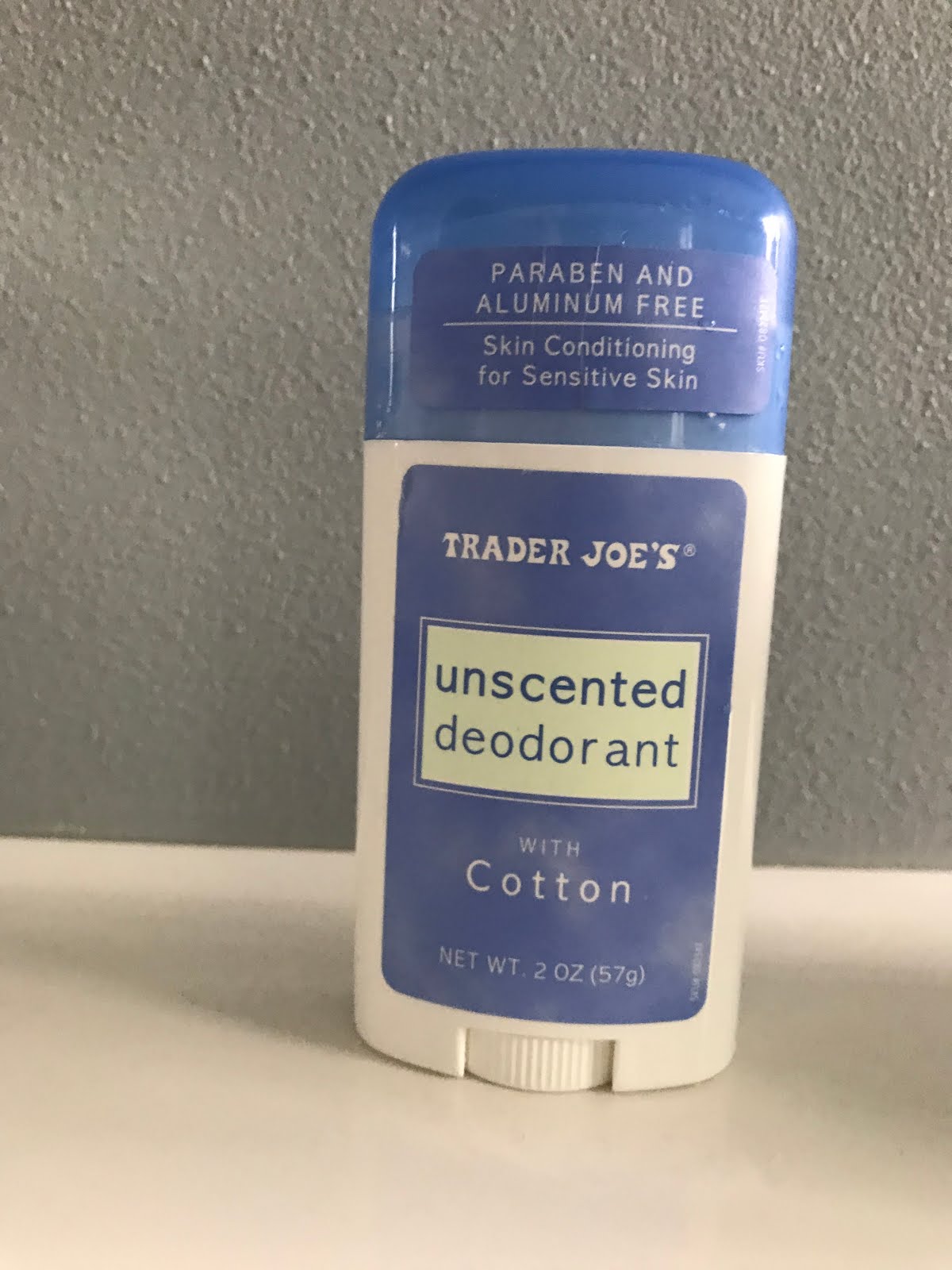
- companies sell solid deodorant in a package made of this much plastic when only a fraction of the package is actually needed for the small amount of deodorant inside?

(Yes, I know.  They are trying to fool me into thinking I am getting more product.) And might I add, when the solid deodorant starts to dwindle, it falls out as you screw it up from the bottom.

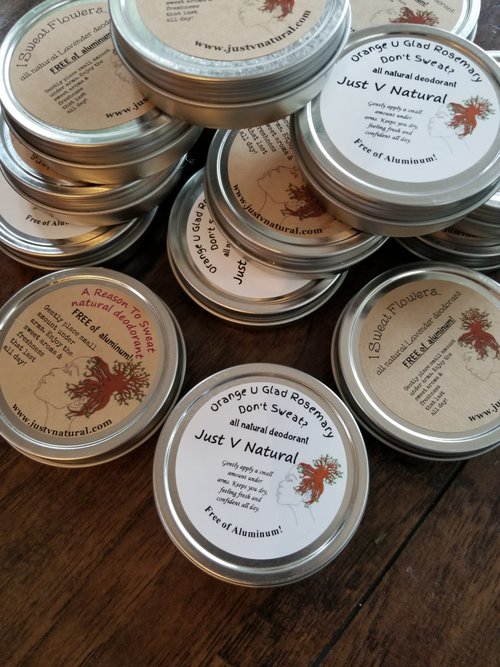
I have switched to this:


Check it out--made by a local small-business owner (and she ships).  


What is causing you to scratch your head in confusion these days? May your questions all have answers.  And please stay home and stay safe!


**See:  Inquiring Minds Want to Know  
know and Why Do They Do That?  

Tuesday, April 7, 2020

THE VIRUS MADE ME DO IT: Cooking in the Time of a Pandemic

I am not much of a cook.  (Go ahead; ask my friends and family.)  In saying this, I don’t mean to say that I can’t cook – I can get a meal on the table – or that I don’t cook – I do.  It’s just that it isn’t a passion or even a pleasure most of the time.  True, there are rainy days when I enjoy making a big pot of soup, but most of the time cooking is just something that has to get done.

Like many other uninspired cooks, I have a small but sufficient repertoire of meals that I rotate through. And although the rotation may be limited, we eat well.  My husband doesn’t like to cook either, but he can chop – we eat lots of salads, lots of fresh stuff.  

I have even been known to cut out interesting-looking recipes from the paper and put them in a notebook—a notebook that, I confess, mostly stays closed until I have to figure out what to take to a potluck or some such event.  

So, this isn’t a cry for a meal service; it’s just a report that, to my great surprise, I have, since being homebound by the virus, taken an interest in cooking.  The other day, for instance, Bill announced that he was going to the store, and I heard myself say, “Let me get out my recipes.”  

These are not words often uttered in my house. 

I made a list.  He brought home ingredients.  I started to cook.  

I cooked new things.   

I don’t know what to make of this.  I look at myself in the mirror and wonder whether I have been replaced by a pod person.

Pod person or not, though, it has been—dare I admit it—kind of fun, punctuated, of course, by other more familiar kinds of fun, such as gardening.  (I wouldn’t, after all, want to go overboard with this cooking thing.)

Let me pause here to note that most of the gardeners of my acquaintance seem also to be enthusiastic cooks.  I don’t know why I don’t share that enthusiasm.  I have often thought that cooking resembles gardening in this regard:  If you don’t enjoy the process, the whole business generally feels like drudgery.  After all, gardening, like cooking, is never finished (although you do get to take a break for much of the winter.)  

Still, I love everything about gardening.  I don’t do it to reach a final result.  I do it because I find the repetitive tasks to be relaxing and rewarding.  I do it for the beauty and peace that I experience along the way.  My garden will never be finished.  I will never be “caught up.”  And that’s OK.  There are whole days and weeks and months of glory to be enjoyed before plants die back or go dormant or lose their leaves or their lives.

Cooking, on the other hand – such an ephemeral outcome. All that work and the food is gone in minutes.  So, I will say it again; you have to be in it for the process. And for most of my life, on most days, the process has left me cold.  

Those of you whose interests are the opposite of mine are in a better position than I.  After all, if you don’t like gardening, you can just plant junipers in a sea of bark dust and call it good.  But, if you don’t like cooking, well—you still have to cook, unless you have the means to hire a chef or go out to eat every day.

I, for one, cannot afford a chef (nor would I want one hanging around my house) and have no interest in going to restaurants on a daily basis.  In any event, we can’t go restaurant hopping during a pandemic.  So, I am delighted, if baffled, by the sudden and unexpected uptick in my interest in food preparation.  

Will this enthusiasm outlast the pandemic?  If I were a betting person, I’d bet not.  You know what they say about old dogs and new tricks.  Still, cooking is helping to solve the existential dilemma during this time of social isolation and giving me something to look forward to as evening approaches each day.  

Maybe being a pod person isn’t such a bad thing, after all . . .

Photo by Toa Heftiba on Unsplash

(Stay safe, everyone!)