Monday, September 25, 2023

WHO YOU GONNA CALL?


From ghoulies and ghosties
And long-leggedy beasties
And things that go bump in the night,
Good Lord, deliver us

         - Traditional Scottish prayer


The first time was a month or so ago.


I had just settled myself for an afternoon lie-down, when I heard a strange noise--a very loud rattling.  At first I thought the sound was coming from outside, but when I got up and investigated, I discovered my battery-operated Quip toothbrush rattling around in the cup where it resides.


It had turned itself on. 


This seemed strange, but I didn’t think too much about it – just turned the toothbrush off, put it back in its container, and returned to my prone position. 


And then, a short while later, it did it again.  This time it got my attention. 


I took the toothbrush apart.


A couple of days later, I put it back together, and life went along without event.


Until --


Until a couple of weeks later, when just after getting into bed for the night, I heard a noise again.  Thinking it was the toothbrush, I headed into the bathroom, only to discover that, while my toothbrush was behaving itself, my waterpik had turned itself on.  


Huh, said I to myself, as I turned it off.  Huh.  What are the odds?


No sooner had I resettled myself, than it turned itself on again.  Now, I was, shall we say, the teensiest bit unsettled.  I turned it off and brought it into the bedroom, so I wouldn’t have to get up should it turn on again.


You can guess what happened next.  


Yep.  I lay rigid in bed, waiting for a repeat performance.  Sure enough, about 45 minutes later, my waterpik was back in action. Thoroughly unnerved now, I turned it off, carried it into the bathroom, and tried unsuccessfully to open it to remove the batteries--only to remember that it didn’t have batteries.  It has a wall-plug-in recharger. 


Beside myself at this point, I carried the offending object through the dark house and left it in the garage, lest it should turn on again.  


The next morning, after a restless night, I called my friend Linda.  


Her immediate response to hearing my story:  “You have a poltergeist.”


My response:  “Huh.  Now what?”


Was it possible, we wondered, that my body’s electrical system was out-of-whack and causing disturbances in the field?


Nah.  It was a poltergeist.  But, what to do?


I mean, are there really ghostbusters?  Probably not.  So, I put the matter behind me and went about my business.


With the waterpik safely in the garage, things were quiet for a while.  

Quiet, that is, until the toothbrush turned itself back on.  There was nothing for it, but to take it apart again -- and leave it apart.


The next time I saw my daughter Mara, I recounted the events to her.  “Mom,” she said, without a moment's hesitation, “you have a ghost.”


I was not comforted when my friend Noelle had the same response.

We decided to do the only rational thing.  That is, we decided to smudge the house.  She came over the next day with a sage bundle, and before proceeding, we pondered what the poltergeist/ghost might want.  


Was it someone who had recently passed, trying to be funny?  Was it a warning?  If so, what was the warning?  Before lighting the sage, we asked the poltergeist/ghost to kindly find a less alarming way of contacting me, and helpfully suggested it might use a dream to tell me whatever it wanted to communicate.


(Oh, you may scoff.  But, what, pray tell, would you have done?)


We then commenced to thoroughly smudge every room in the house, paying special attention to the bathroom.


I am happy to report that things have been quiet since the smudging, although it is true I haven’t had the nerve to put the toothbrush back together or bring the waterpik in from the garage. . .


Please share your remedies and/or like experiences in the comments. In the meantime, ponder this.  While I was visiting my daughter Anne a few days after the smudging, I was startled by her robot vacuum cleaner suddenly turning on by itself.  Oh, no, I thought, the poltergeist/ghost has followed me.  

Anne assured me that it had something to do with its settings and had nothing to do with me, but I’m not so sure . . . 


What do you think?  


Sunday, August 27, 2023

TEA AND ME

Have you noticed that in British mysteries, whether in book form or on TV, tea is the universal comforter?  A nice "cuppa" will take care of nearly everything. 

And so it does for me.  


Because I grew up with Scottish immigrant parents, tea was a constant in my childhood home.  I don’t remember how old I was when I was first permitted to indulge, but I do remember that by the time I was ten or so, I was the one who would get up on Saturday mornings to put on the kettle.  


I would make a pot of tea – loose tea, of course, and after the tea had infused, I would pour the liquid through a strainer into a cup for each of my parents, who would sit up in bed to enjoy this service.  Let me hasten to add that I poured the tea into actual teacups. With saucers. Not the mugs that they, and I, later favored.  


After serving my parents, I would pour a cup for myself, load it up with milk and sugar, and carry it into my room, where I would get back into bed with my tea and a book.  (The other constant in my young life.) 


In later years, my folks switched to tea bags, but those early days of preparing loose tea are etched in my memory.  And I can still see myself sitting up in bed, cup of tea in hand, happily reading Anne of Green Gables—with no electronics to spoil the pleasure of the moment. 


I have said that ours was a tea-drinking household, but my mother did keep a jar of instant coffee in the fridge, from which she would occasionally spoon out enough "coffee" (who knows what was in that stuff) to prepare herself a mid-morning cup.  My father, on the other hand, was a purist – I never saw coffee pass his lips.  On the rare occasions when we would go to a restaurant, he would send his tea back if the water wasn’t sufficiently hot, insisting that tea required boiling water in order to properly infuse.  And on very hot days, he would drink very hot tea, insisting it was the best way to cool down.  (No, I don't get it either.) 

For many years, I continued to desecrate my tea with milk and sugar, but sometime in my twenties, I gave up the additives and began to drink it black. Over time,  I, of necessity, made other adjustments.  In my youth, I could drink tea until bedtime with no adverse effects.  I was maybe in my forties when I had to stop drinking tea after noon if I wanted to sleep at night.   And, eventually, I had to give up caffeine altogether in order to avoid tossing and turning away my nights.  

I wasn’t about to give up my tea, though.  I simply switched to decaf black.  (Here is a tip for the unwary – most restaurants do not carry decaf black tea, so bring along your own tea bags.  I don’t know about you, but herbal tea doesn’t cut it for me when I am wanting my cuppa.)**

Through all these changes, I never strayed.  Never had a fling with coffee.  Oh, sure, I tried it once or twice – didn’t like it and it tore up my stomach.   I do, however, love the smell of brewing coffee, so it is a bonus to have a husband who prepares a pot each morning. 


And here is another happy thing.  Most of my close friends are tea drinkers.  Is this a coincidence?  Americans drink three times as much coffee as tea—I looked it up.  How fortunate am I to have found my tribe?  Even those of my friends who are coffee drinkers will enjoy the occasional cup of tea with me.   Indeed, for my last decade birthday, I gave myself a tea party, and, to my knowledge, no one snuck in a flask of coffee – or whisky.


So, like the denizens of those British mysteries, I expect it will always be tea for me.  Tea with friends.  Tea for comfort.  Tea for warmth. Tea for its own sake.  


And you, dear reader, what is it that you have brought along from childhood to bring you comfort?


                                Photo by 童 彤 on Unsplash

**Another pet tea-drinker peeve:  Hotel and motel coffee machines where the tea water runs through the same hose as the coffee.  The only thing worse than coffee is tea that tastes like coffee.  

Sunday, July 23, 2023

THE WEEK IN REVIEW (Or Please Don't Make Me Talk to a Robot)


Recently, a friend and I were having one of those idle conversations about what, if anything, we would do differently if we won the lottery.  I said I would fly first class and hire someone to come to my house and cook a couple of times a week.  My friend, wise woman that she is, said she would hire a personal assistant.


Of course.  Why hadn't I thought of that?  I immediately traded in my wish list for hers.  


Why do I need a personal assistant?  Well, here is what my last week looked like.


MONDAY:  


I called a plumber to fix the water pressure in our shower.


We had a new screen door installed.  (Made possible by my spending hours online last week looking for, and ordering, a screen door.)  


TUESDAY:  


The plumber came and fixed our shower.  


We realized the screen door wouldn't open to its full arc.  I texted the person who had installed the screen door to see if he could fix it.   


WEDNESDAY: 


I attempted to use Venmo to do a good deed. I didn't have sufficient information about the person I was trying to send money to, so I had to exchange emails with someone who had the info.


I saw I had received a bunch of text messages and realized my phone was not dinging to notify me.  I went into settings and tried to fix this a couple of different ways.  No success


THURSDAY:  


I called Apple to get help with retrieving my Word documents from the cloud.**  (This was in follow-up to another call to Apple a couple of weeks ago seeking help with my very-slow computer.  The person who I talked with that time called my six-year-old computer "vintage," and said he would try to help.  He walked me through taking things off the computer and putting them back on.  The next day, I discovered my documents were stuck in the cloud. It took me a while to get up the energy to call back . . .).


During this second call to Apple, a nice woman hastened to be of help when I told her I would rather stab myself in the forehead with a fork than call Microsoft.  And by hastened, I mean she spent two hours with me, after which I believed my problem was solved.


FRIDAY:  


My occasional yard helper was supposed to come, but our street was being repaved, and after we texted back and forth about how he could reach the house, we had to reschedule.


A technician came in the late afternoon (after I had waited all day) to fix our internet connection.  (This was in follow-up to our losing the connection three times in the last month.  He came after I had many interactions--I won't call them conversations--with a robot over the course of many calls to our internet provider, trying to reach a human being.)  I didn't catch the technician's name. I will call him Ralph.  He looked like a Ralph.  We had a conversation that went something like this:


Ralph (after fiddling with the box outside our house for over an hour and climbing a pole in order to fiddle with another box):  Your DSL lines are too fast for the distance from the something, something.


Me:  Huh?


Ralph:  I can’t slow them down without an order, and I can’t ask for an order.  The customer has to do that.


Me (voice rising in panic):  So, I have to call CenturyLink? Please, don't make me call CenturyLink. Please, don't make me talk to a robot.  


Ralph (sympathetically):  Something, something about what he would try next.


Ralph (a while later):  You shouldn't have to call CenturyLink.   I just have to drive to (fill in the blank, I didn't understand where) to check the line.  It should be fine.  


Me (restraining self from grabbing his sleeve):  Wait.  What if you leave and it still isn't working?


Ralph (in a don't-you-worry-little-lady voice):  I'll be able to tell from the other end.  I'll come back if it isn't working.  


Me (muttering to self as Ralph left):  Please don't make me talk to a robot.


By some miraculous twist of fate, the connection held and I have not seen Ralph since.


(Also on Friday - The person who installed the screen door came by and loosened something.  It still isn't right.)


SATURDAY:  


I started a blog post about Ralph and the robot. As is my habit, I saved it in a word document, with the intention of transferring it onto the blog when I was finished.


SUNDAY (today):  


I tried to make a Skype call to my cousin in Scotland.  I discovered that Skype had disappeared from my computer.  I was unable to reinstall it.   


I looked for the blog post I had started.  It was nowhere to be found. Apparently, the help from Apple has led to new documents being stored in a place that I am unable to find or access.  (My brother and sister-in-law will be visiting this week.  She is good with computers.  I am hoping she will be able to help me.  Are you reading this, Janice?)


I went to my niece's house to pick something up, and, while I was there, asked her to help me with my text notifications, which she kindly did at lightening speed.   (Bless the young people.)


I rewrote this blog post.  Believe it or not, I left some things out . . .


So, yes, a personal assistant (preferably human) would be nice.  I am thinking maybe I could pool my resources with a bunch of friends, and we could take turns using such an angel to de-stress ours days.


Want in?


                            Photo by Possessed Photography on Unsplash

** I used to think the cloud was literally a cloud.  I thought the information was floating around above our heads somewhere.  I was disappointed to learn the cloud was actually a warehouse full of computers somewhere in central Oregon.


Sunday, June 11, 2023

WAS JOHN LENNON RIGHT ABOUT INSTANT KARMA? (And Other Uncomfortable Questions).

I wrote in a recent post that I am comfortable living with mystery. There are, however, questions that cause me great discomfort.  Here are a few:


Is it possible to hold the misery of the world at the same time as we live in comfort? 


How can I be buying things that I want, when others lack the most basic necessities?


What are we to do with the news of an entire planet, the processing of which is above our evolutionary pay grade?


What is an individual to do about earthquakes, climate change, starvation? 


Will the poor, as Jesus said, always be with us?


If all wealth were put in a pile and divided equally among the citizens of the world, how long would it take for us to sort into rich and poor again?


Am I doing enough? Am I doing anything useful?


Does my recycling and eschewing as much plastic as possible make a difference when manufactures keep encasing everything in the stuff?


Does my driving a hybrid car matter when so many Americans are still in love with their giant, gas-guzzling vehicles?


Is instant karma gonna get me, as John Lennon predicted?


Will I be one of the downtrodden in my next life?


Why do some people have five homes when others have none?


If every household on earth had the same amount of land and the same-sized house, how many square feet would that be?


Should we fly for pleasure when we are facing a global climate emergency?


How about if we are flying to visit family?


Why is there always enough money for war, but never enough for social programs?


Why are humans incapable of addressing a problem before it is a crisis?  (eg. climate change)


Why do humans let the genie out of the bottle and ask questions later? (eg. AI)


Why are we so divided when we should be pulling together to solve the great challenges of our time?


Are human beings fatally flawed?


What would you add to this list?


                                                             Photo by Marcel Strauß on Unsplash


Sunday, May 7, 2023

LIVING IN THE FACE OF DEATH*


So, here’s the deal.  


We are born helpless.  And then, guided and cared for by our parents and other adults, we spend the first few years of our lives figuring out our moving parts.  We learn to speak and walk.  We explore and attempt to conquer the wonders of this place where we have found ourselves. We form attachments.  And, given the right circumstances, we achieve some mastery and sense of belonging.  In general, we come to feel pretty comfortable with, and accustomed to, our surroundings.  We are at home in the world.


But sooner or later comes a shock.  One day, while we are minding our own business, not looking for trouble, feeling secure in our lives  -- it happens:  We discover death.  We learn that we and everyone we love will eventually have to leave this place.


Gaining this knowledge is like being thrown out of Eden. We hadn’t realized it, but permanence was the water we swam in.  With our rude awakening to the fact of death, our egos struggle to make sense of the reality that we are not, in fact, permanent fixtures in this world.


Over time, we find various ways of coping with our fears about death.  Some choose the path of denial, kicking thoughts of death down the road until it can’t be ignored.  Others ponder death, and decide it is the end of all consciousness.  Still others believe it will take them to a peopled heaven. I lean toward the Taoist view that we come from wholeness, enter the world of forms, and then, at our death, return to wholeness.  I do not, however, have any interest in arguments about what comes next.  I am content to abide with the mystery.   


So today I don’t want to talk about what death might look like.  I, instead, want to talk about our astonishing ability to create meaningful lives in the face of death.  And let me begin by saying that by “face of death,” I do not mean living in the face of a prognosis of say, a week, a month, or a year to live. I mean the basic fact that we’re all going to die. 


Period.


We live in an impossibly fragile world, filled with dangers and ultimate death.  And yet we build lives of beauty and purpose.  Yes, there seems to be some kind of will-to-live that keeps all animate beings moving forward, but we humans do so much more than simply keep ourselves alive.


We could spend all of our limited time seeking pleasure, selfishly hoarding what we have in order to insure our own well-being.  And some do this. But most of us, I think, spend at least as much time on activities that might seem almost quixotic in light of the fact that we will die.  


I find this deeply moving.  


Here is just some of what we do:


We spend years obtaining an education.


We train for and spend further years at a career.


We fall in love.  Indeed, we forge and nurture all manner of relationships, despite certain future loss.


We birth and raise children.


We read and seek knowledge that, as far as we know, will die with us.


We write plays and stories and songs and poems. 


We dance.  We sing. We paint.  We sculpt.


We play games. We run.  We ride bikes. We climb mountains.


We cook meals that require far more creativity than is necessary to keep our bodies alive.


We build things – homes, bridges, automobiles.


We discover things – gravity, electricity, the solar system, bacteria.


We invent things – the wheel, writing, the lightbulb, computers.


We travel.  We learn languages not native to us.


We build rocket ships that fly to the moon and beyond.


We plant gardens.  And, perhaps more surprisingly, we plant trees that won’t mature until after we have died.


Even in previous centuries when humans had a much shorter life expectancy, people got on with creating lives and leaving behind gifts that we enjoy to this day.  Take writers, for example. Shakespeare wrote all those plays and sonnets before he passed at age 52. And Keats, well Keats wrote his odes before expiring from TB at age 25.  And let’s not forget Austen, who managed to leave us an engaging and lasting record of the manners of her time and place before she died at age 41.  


Looking back further to a time when humans lived lives that seventeenth-century philosopher Thomas Hobbes characterized as “nasty, brutish, and short,” people also got married, had babies, worked, danced, sang, and, in general, seem to have done their best to make something of their lives.  As far as we know, this has ever been the human way.


I am in awe of the fact that those who came before us did what they did, and that we do what we do, in spite of the knowledge of our certain future deaths.  Or maybe it is that we build lives, not in spite of, but because of our pre-knowledge of death.  I don’t know about you, but I am quite the procrastinator when I don’t have a deadline or a structure.  Without death, there would be no final deadline.  Maybe we would just fritter away our time, knowing that everything could wait until tomorrow. Maybe we would be paralyzed by time without end. Maybe we would be bored.


Maybe death is our friend.  Maybe it is what gets us out of bed in the morning.


And perhaps if we acknowledge death, we will come to feel comfortable with knowing ourselves to be a part of what the poet Mary Oliver called “the great wheel of growth, decay, and rebirth.”  So that even if we do not expect to survive death in any conscious way, we can take comfort in knowing we are participating, along with all other living beings, in the ongoing cycle of life and death.   


Here is a little poem from Wendell Berry that helps me to keep my eyes on this cycle and to celebrate my part in it.


       When I rise up

       let me rise up joyful

               like a bird.


       When I fall

       let me fall without regret

               like a leaf.


Can we get past our egos to see the beauty in our living and our dying?  The poet Joe Brainard put it this way:  "Death has a very black reputation but, actually, to die is a perfectly normal thing to do.  And it’s so wholesome:  being a very important part of nature’s big picture. Trees die, don’t they?  And flowers?”


Here is some more of what we do:


We care for the sick and dying.


We volunteer our time and give of our resources to help others.


Sometimes we help others in ways that might lead to our own deaths.


We spend time seeking social justice – not just for ourselves, but for others.


Yes, I know there is evil in this world.  And ugliness.  And unfairness. I know that not all of what we do with our lives is noble.  Still, it seems to me that more people than not are working quietly to add something to the lives of those around them, to do some good while they are here. You are not likely to read about these people in the news. But you know them. They are your friends. Your family.  Your co-workers. And it is not only those with great resources who add to the beauty and progress of the world. Those with very little also do unto others.  In fact, I have read that poor Americans give a larger percentage of their income to charity than middle class Americans. 


And when we plant that tree or write that book or work for social justice, or even just go to work every day and come home to feed our families, we are building and contributing to a world that will benefit not only ourselves, but those around us and those who will come after us.


Mary Oliver closed one of her poems with the famous line, “Tell me, what is it you plan to do with your one wild and precious life?”   She seemed to provide an answer when she penned these words in a late-in-life essay:  “[H]aving chosen to claim my life, I have made for myself, out of work and love, a handsome life.”


May we all be able to say the same.  And when our time comes, may we fall like leaves.  


Without regret.   


*This post is a condensed version of a talk I gave three years ago at the Unitarian Universalist Church of Vancouver (WA)


Wednesday, April 19, 2023

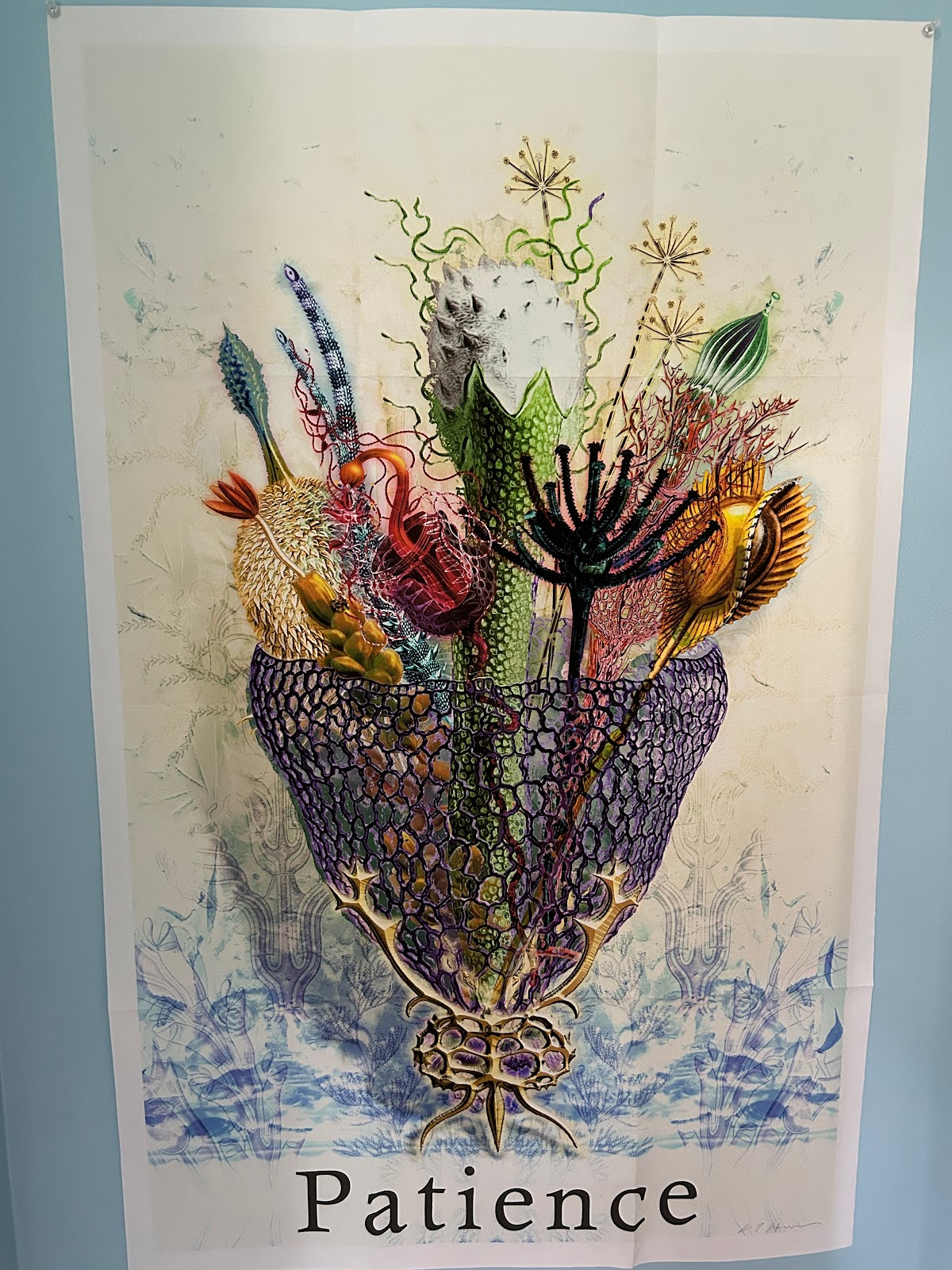
IF PATIENCE IS A VIRTUE, DOES THAT MEAN I AM WICKED?

A few years back, my husband and I bought a Prius.  The following year, a close friend bought one too.  One day, when I was pondering where to store emergency supplies in our car, this friend suggested I put them in the hidden area under the trunk’s floor.


Hidden area?  I didn’t know there was a hidden area.


When I asked her how she knew about this, she told me she had read the manual. What a concept.  I have never read a car’s manual, except to look up how to perform a particular function or to find out why there is suddenly an alarming-looking exclamation point on my dashboard   There are probably many features of my car (and past cars) that I know (or have known) nothing about.


Here’s the thing.  I have a teensy problem with impatience.  Sitting and reading through a car manual is beyond my patience limits.  Same with reading directions.  Sure, I can read and follow a recipe (if, and when, I feel like cooking), but carefully reading about how to put together something like a bookcase or a desk that arrives in pieces in a box – I just can’t make myself do it.  


In my defense, the directions are often badly translated from Japanese or Swedish.  And don’t get me started on the diagrams.  But even if they were written in perfect English, with diagrams aimed at a third grader, I would be unlikely to get beyond the first page before my eyes glazed over.  


I am not proud of my impatience.  I know it isn’t attractive.  It gets me into trouble with my husband sometimes – he being a slow-talking Midwesterner, and I being a fast-talking Jersey girl.  “Are you going to finish your sentence?” I will ask when he takes one of his 10 to 15-second pauses mid-thought.  


Not nice, I know, but I feel like my idle is set too fast, and I don’t know how to reset it.  (Is there a manual for this?)


Sometimes—to my detriment—I combine impatience with procrastination.  I can’t make myself pack for a trip ahead of time.  I wait until the last minute when I don’t have the time or patience to do it right.  In consequence, I will wind up throwing way too many of the wrong clothes into a suitcase and hoping for the best.  (I have done better with infrequent trips abroad – for these, I make myself decide which five things I will wear for two weeks.  But, car trips, fuggedaboudit – there is no limit to what can be jammed into a car.)


And while I am confessing, I will share that I am extremely impatient when I am sick.  My husband will simply sit and read when he is under-the-weather.  Not me.  I will chafe against my restrictions until impatience turns to panic, as I become certain that I will never feel well again.  


Why can’t I be more like him?  (If patience is my spiritual lesson for this lifetime, I may have to live another hundred years, and there is no guarantee that would be long enough.)  


There are, however, occasions for what I will call justified impatience.  These include long lines at stores that have fired most of their checkers and replaced them with self-checkout stands; waiting on hold with a company that refuses to hire enough humans to service their customers; phone trees with no humans at the end; phone helpers who have neither answers nor power; and companies whose only phone help is a recording telling you to search their web site, which, of course, does not have the answer to your question. I will not apologize for my impatience in these situations, although I do try not to take out my frustration on the aforementioned phone helpers.  


Justified impatience aside, I do get this patience thing right at times.  I have endless patience for my granddaughters, aged one and one-and-a-half.  I am charmed when they hand me things over-and-over again or want me to read the same book multiple times.  I was patient and present during my years as a hospice volunteer.  I am never bored in my garden, where my back gives out long before my patience, and I can sit for a long time once I get going on a writing project.  


That’s a start, isn’t it?  


I’ll report back in a hundred years . . .


                                               Art by Carl Chew