Sunday, August 18, 2024

THE 100 THINGS


A few years back, I read the novel Asymmetry by Lisa Halliday.  Among other plot lines, it is the story of a romance between a woman in her twenties and a much older man, loosely based, or so I have read, on the real-life romance between the author and Philip Roth.  I liked the book, but this is not going to be a review.  Instead, I point to it only for one line. Here is how I remember it -- When it’s time to get ready for bed, the older man announces to the young woman that he must start to do “the 100 things.”   I found this line amusing when I read it.  Five years on, it is starting to feel a bit too close to home.  


Of course, I have always brushed and flossed my teeth, washed my face etc. before going to sleep.  So, why does this routine suddenly feel more onerous?  I guess it’s just that I am a bit older than I was when I read the book, and by the time I am ready to go to bed, I am (surprise!) tired, and these simple tasks are an unwelcome roadblock on the path to sleep. Damn, I say to myself, I still have to do the 100 things.


So, I have cleverly taken to doing my ablutions soon after dinner.  I don’t know quite how to describe the pleasure it gives me, when, heading to bed later in the evening, I realize I don’t have to pause to do the 100 things.  As an added bonus, early tooth brushing discourages me from eating after dinner. 


Win. Win.


In truth, though, it is my morning routine that feels more like slogging through 100 things.  Before beginning my day, I again brush my teeth, then embark upon a series of stretches.  Go ahead -- ask me how much I want to do these stretches.


You guessed it.  I don’t want to do them at all.  I want to go downstairs and have a cup of tea.  Still, I spent too many years visiting my mother’s assisted living center to be able to kid myself that sitting still is a good approach to healthy aging.  


In addition to stretching, I walk most mornings, and, in summer, when the days will heat up rapidly, my walk must also be accomplished before breakfast. And then (again in summer), watering must be done early before high sun brings on evaporation.  


Before I know it, half the morning has been eaten up by the 100 things. (My husband , who has to swallow a bunch of medications, calls his tasks the 1000 things. As Bette Davis once opined, getting older is not for sissies.)


And while I’m counting the 100 things, let’s not forget the annoying tasks that seem to take up more and more of my time throughout the day, such as:


Paying bills 


Deleting, answering, and unsubscribing from emails.


Dealing with computer issues.


Waiting on hold, while trying to resolve computer issues.


Waiting on hold while trying to make medical appointments.


Doing laundry.  Folding laundry.  Carrying laundry up and down stairs.


You get the idea.  How did I manage to do all these things while working?  Oh, yeah, that aging thing again.  And wasn’t there less waiting on hold ten years ago?  


I guess I should be grateful I still remember that I need to do all of these things. . . .  


I’ll work on that.


Anyone else over the age of, say, 60 feeling at all daunted by your own 100 things?  Did I leave any out?  Please comment, telling me I am not alone.   


                                                                                                        Photo by Anne Nygård on Unsplash


Tuesday, July 30, 2024

RING OF FIRE: SOME THOUGHTS ON MY SMOKE-FILLED YOUTH

I stepped out of my car in a parking lot yesterday and walked straight into a cloud of cigarette smoke.  I nearly gagged, although the smoking culprit was a car's-length away.  It amazes me that cigarette smoke affects me so, given that I grew up in a haze of the stuff.  My father chain smoked--lit one from another from the time he woke up until the time he went to sleep.   And in those days - the 1950s and ‘60s - he and everyone else smoked inside the house. We had a small home, which means I effectively smoked until my father quit cold-turkey when I was fifteen.  

And people didn’t just smoke at home.  They smoked in their cars.  And at work. And on airplanes. And anywhere else they damn well pleased.  (Sure, airborne smokers were eventually confined to the back of the plane, but, come on, there wasn’t a plexiglass divider.)

Kids these days nag their parents to quit.  This never crossed my mind.  Almost everybody's dad (and some of the moms) smoked.  Most homes had pedestal ashtrays – tall brass affairs that cradled shallow glass bowls.  Then there were the DIY ashtrays that I crafted during my New Jersey childhood.  I would collect large seashells when we went “down the shore,” and color them with crayons, before proudly presenting them to my father to use as receptacles for his cigarette butts.  

I am sure my hair and clothes smelled perpetually of smoke.  But, again, I was so used to living in smoke-filled rooms that I didn’t notice the odor.  After all, smoking was normal.  And not just normal.  Smoking was adult.  Smoking was sexy.  In those pre-internet days, television was king, and smoking was all over television.  Newscasters smoked.  Television personalities smoked.  I can still see Dean Martin with a drink in one hand and a cigarette in the other.  

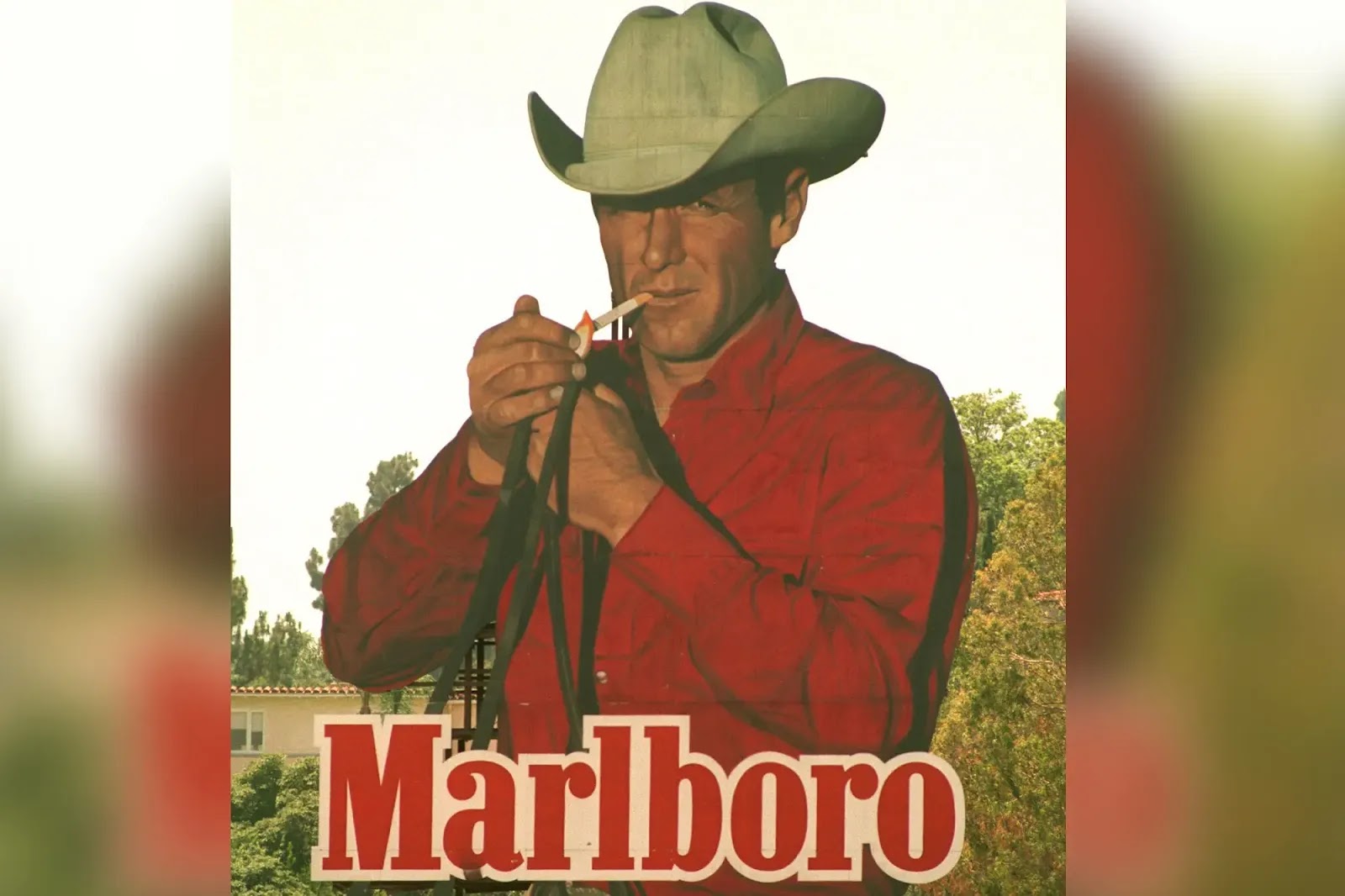
And, oh, the ads.  The Marlboro Man rode on horseback across our screens, admonishing the viewer to “Come to where the flavor is; come to Marlboro country.”  Marlboro country was a mythical place, where men were rugged cowboys, and smoking was cool.  


These ads, of course, were aimed at men.  Women were meant to be enticed by Virginia Slims ads, which co-opted the nascent women’s movement.  


Despite the Surgeon General’s 1964 report linking cigarette smoking to cancer, bronchitis, and other diseases, it wasn’t until 1970, that cigarette ads were banned from television and radio. By then, I had witnessed countless hours of said ads, not to mention dozens of old movies that made cigarette smoking look sophisticated.  These days, only lowlifes and baddies smoke in movies and on TV, but it wasn’t always so. 

My love of old movies and the best efforts of advertisers notwithstanding, I never did succumb to the siren call of cigarettes. Well, there was that one time. I was maybe 18 when, on a whim, I bought a pack at Walgreens and, standing outside, took a few covert puffs before choking and throwing the rest of the pack in a nearby garbage can.  That was the alpha and omega of my smoking career. 

I’m glad smoking is no longer acceptable in restaurants and offices, at least in our part of the world.  I’m glad I no longer have to stand in a pall of smoke while waiting to use the loo on an airplane.  I’m glad my experience in the parking lot yesterday was unusual enough to be noteworthy.  And I hope that scenes such as the one I am about to describe will one day be a thing of the past.  

My mother lived in an assisted living facility for 12 years.  Those residents who wished to smoke were shunted outside to a gazebo, where they would huddle with their cigarettes in all kinds of weather.  I was especially saddened by the elderly women, for whom smoking had been so glamorous in their World-War-II youth. Seeing them wizened and furtive always gave me a pang. They had not had the benefit of the Surgeon General’s report.  I doubt they knew they were engaging in an addictive activity. I hope that smoking calmed them and gave them courage during the war, and I am sorry it burdened them in their final years. I hope their children and grandchildren have found other ways to self-soothe.  

And I hope you will breathe free tonight, cozy inside a smoke-free home.   

Wednesday, July 17, 2024

WHEN DID IT ALL GO WRONG? (and how shall we meet the moment?)

Here I am living my life in a western nation, a supposedly "civilized" nation, a nation of plenty.  So, why did I lie awake last night wondering if I am living in hell?


Well, there was the debate -- a string of lies from the Republican candidate and confusion from our current president.  Although, to be fair, the liar himself frequently spews whole nonsensical paragraphs at his rallies.  Let's face it - they are both too old.  


And yet, this is our choice.


Then there was the attempted assassination of the Republican candidate. Look, if you have been reading my blog for a while or if you know me personally, you know it would be an understatement to say I do not wish to see him in the White House again.  That does not mean, however, that I want someone to shoot him.  I have lived through three assassinations.  These shootings tear at the  fabric of our democracy, along with the bodies at which they are aimed.  


Here's another reason why I couldn't sleep last night.  I made the mistake of looking at the news before going to bed.  I am usually wise enough not to do this.  I guess I had a lapse in judgment.  I watched a video of three different young white men angrily threatening violence in response to the attempted assassination.  


How is anyone sleeping these days?

I haven't even mentioned climate change or the recent Supreme Court decision, granting monarch-like powers to the President, or attempts to drag women back to the 1950s, not to mention the wars in Gaza, Ukraine, Sudan, and Somalia.  I just can't go there today.  


When did the pile-up begin? Was it 9/11?  Was it Sandy Hook?  Was it Parkland?  (Too many mass shootings to list here.) Was it January 6?  Was it the pandemic?  


Is it just that I have lived long enough to be feeling the pile-up?  I did, after all, grow up during the Cold War, which brought with it the Cuban Missile Crisis and the threat of nuclear annihilation.  There were also the aforementioned assassinations--two Kennedys and Martin Luther King, Jr, the Vietnam War, and more.  


Of course, things were pretty bad before my time.  My father lived through two world wars, my mother through one.  They endured the bombing of their city during the Second World War.  


Really -- Was there ever a time when things were ok?  I have a friend whose father once asked her when in the past she might like to have lived.   She had to tell him that, as a woman, she could think of no time in the past when she would have wanted to live.   


Sorry to dump all of this on you.  Maybe I'm feeling overwhelmed because of my lack of sleep last night.  Tonight, I will not read the news before bed, and tomorrow I will be able to heed these words from the late historian Howard Zinn, posted by a friend on FB this morning:


To be hopeful in bad times is not just foolishly romantic.  It is based on the fact that human history is a history, not only of cruelty, but also of compassion, sacrifice, courage, What we choose to emphasize in this complex history will determine our lives.  If we only see the worst, it destroys our capacity to do something.  If we remember those times and places--and there are many--where people have behaved magnificently, this gives us the energy to act, and at least the possibility of sending this spinning top of a world in a different direction.


And if we do act, in however small a way, we won't have to wait for some grand utopian future. The future is an infinite succession of presents, and to live now as we think human beings should live, in defiance of all that is bad around us, is itself a marvelous victory.


So, friends, let us take heart.  Let's live now as we think human beings should live, in defiance of all that is bad around us.


Let us be radically kind. 


In the words of Mr. Rogers, let us look for the helpers.  


Let us be the helpers.


                                              Photo by Lina Trochez on Unsplash


Tuesday, July 2, 2024

YES, YOU CAN BE TOO RICH OR TOO THIN


“You can never be too rich or too thin”


-       Attributed to Wallis Simpson, among others.


I beg to differ, Wallis.


Some time ago, I found myself alone in an airport with a few hours to kill before my next flight.  Looking for a mindless way to pass the time, I went to a newsstand and bought a couple of magazines.  Upon opening one, I was confronted with a familiar sight -- the first ten or so pages consisted entirely of photos of emaciated young models, wearing frowns (they never smile), and posing their puny bodies in aid of selling one thing or another.  


Without hesitation, I sat down on a bench and proceeded to tear out said pages.  As I was energetically tearing, a woman unknown to me came over to cheer me on.


"Don't those pictures drive you crazy," she asked.


"Yes," said I, ripping with ever greater enthusiasm.


I was on a roll.


Of course, my ripping out the pages was not going to change long-standing advertising strategies.  Still, I refuse to spend time looking at these images.  It infuriates me to have our daughters (and ourselves) presented with images of dangerously underweight women as if this were something to aspire to.  


We don't have to buy into this, do we?


Let me assure you that this is not the sour grapes of a woman with a large body. I have always been naturally thin.  (At least until menopause when, I gained a bit around my middle). My weight, however, is not a sign of virtue or of any particular effort on my part.  And I certainly don't aspire to look like those models.  In fact, at my age, too much weight loss is a sign of either illness or drug addiction.


Indeed, I suspect there are drugs involved in keeping those models so painfully thin.  


But, maybe it isn’t the models I need to concern myself with.  After all, if young people are reading magazines at all, they are probably reading them online, where ads can be skipped over.  Maybe I should be turning my attention to social media “influencers” bent on convincing average-sized young girls that they need to lose weight.  Down that road lie anorexia and self-loathing.  


I sure don’t want that to be the future for my toddler granddaughters.


So, yes, Wallis, it is possible to be too thin, and to create unhappiness by urging people in that direction.


And what of the notion that one can never be too rich?


I know there are plenty of people in this world who would conclude that I--sitting in my comfortable house, with a car in the garage, and a bit of disposable income--am too rich.  But for purposes of this post, I am confining myself to the filthy rich, the one percent.


Elon Musk’s wealth is estimated at $221.4 billion.  Jeff Bezos’ net worth is $210.2 billion, while Bill Gates comes in at $133.3 billion.  These are big numbers, and when we put them in perspective, they look even more alarming. A quick Google search revealed that the top one percent of Americans control more wealth than the entire middle class combined, with the middle class defined as the middle 60 percent of households by income.  


Okay.  That was wealth.  Let’s look at income for a minute. Social security data reveals that the average annual wage of the bottom 90 percent is $40,928; the average wage of those in the 90th to 99th percentile is $187,609; and the average wage of the top one percentile is $916,928.  Parsing things even further, the top .1 percentile earns an average of $3.7 million. 


One more figure:  CEOs were paid 399 times as much as a typical worker in 2021.


Enough with the numbers.***  It is clear that a few people control most of the wealth in this country, and that a great swath of our citizenry is scraping by, while their bosses get richer and richer. 


So, yes, I would argue it is possible to be too rich. Embarrassingly rich. And yet I suspect that the mega rich, cocooned in their bubbles of wealth, are not embarrassed.  (Asking for a friend – Do they not realize that if our way of life topples under the weight of their wealth, they will not be spared the fallout?  Do they not see that if their greed overcomes environmental concerns, their children will inherit a dying planet? That income and wealth inequity lead to social unrest?)


It is said that power corrupts.  So, I think, does great wealth. And they usually go together.  On that note, I will leave you with this suggestion. If you want an example of how power and money corrupt, get yourself a copy of Empire of Pain:  The Secret History of the Sackler Dynasty by Patrick Radden Keefe. There you will read of the corruption, not only of a family, but of the lawyers and doctors they drew into their web, along with the FDA and the DEA.  As this book demonstrates, very few are immune to the twin siren calls of money and power. 


One last thing.  Perhaps it is time to update the adage with which I began this post.  How about this?  You can’t be too kind or too healthy.  


                                                     Photo by Mathieu Stern on Unsplash

*** Different studies turn up different numbers, but all demonstrate great income and wealth inequality.


Sunday, June 16, 2024

YOU'RE DOING GREAT; NOW, LEAVE ME ALONE

When my daughters were toddlers and beyond, I responded to their actions and words by naming them -- clever, resourceful, kind, persistent etc. Sometimes, I would tell them something was unkind or dangerous, Now, my daughters are doing the same with their children.  They are going beyond "good job" and "stop that" to name the qualities they are seeing.  

I applaud this feedback.

It appears, however, that a great many people did not receive positive feedback from their parents and caregivers. or possibly they received a boatload of negative feedback. How else to explain the multiple requests for assessment I receive daily?

Almost every time I visit a doctor, hire someone to provide a service, or order something online, a survey asking how he/she/they did will follow.  Sometimes the requests for assessment come before the service is provided . . .

Seriously?  Are they that needy?

I have a life, people.  I'm not going to fill out your surveys.  

Here's another puzzlement.  I listen to a lot of podcasts, which often involve interviews.  It used to be that an interviewee would occasionally respond to a question by saying, "That's a great question."  Now, hardly an interview goes by without these words being spoken.

Honestly, the questions aren't always all that great.  And even if they are, isn't it the job of the interviewer to ask great questions? Is the interviewee stalling in order to come up with an answer? Inquiring minds want to know.  

And while I'm on my soapbox, I'm also not going to open the multiple texts I receive asking for money.  I'm going to block those numbers every time.  It's not that I'm against making charitable contributions.  To the contrary, I make them regularly. It's just that I don't want to see these requests in my text feed. Texts are for brief communications with family and friends.  

So, leave me alone, already. 

Same with requests for political contributions.  Not on my text feed.  Not on your life.  

And then there are the phone calls.  I no longer answer calls from unknown phone numbers.  If a call isn't from a scammer, I assume the caller will leave a message.  Come to think of it, scammers leave messages too . . .

For some reason email stopped working on my phone a few months ago, and I decided not to try to fix it.  So, I'm not dealing with those incessant dings anymore. Yay!  (Actually, a friend suggested turning off notifications for emails, which I did, but not having emails on my phone is even better.)

As for people who come to the house wanting to sell me something, I try to be polite.  I tell them they may give me literature, but I will not agree to anything while speaking through my front door.  (And I'm definitely not inviting them in.)

So, is it just me or do I have companions in wanting to ward off these intrusions?


                                        Photo by Nadine Shaabana on Unsplash

Tuesday, June 4, 2024

UBI SUNT? (Where Are They?)

Yesterday I deleted three people from my phone's contact list.  No, I had not had a falling out with any of them, although you might say they had fallen from my life and the lives of those who loved them.  To put the matter bluntly, they had died--one recently, one a couple of years ago, and one a few years before that.

It was only while searching for someone on my list yesterday that I realized I had no further use for these folks' phone numbers and email addresses.  Still, the deleting felt strange, unsettling.  

It felt wrong to erase these traces of people with whom I had been more or less close, so I'm going to share a few sentences about each in order to counteract the deletions. 

I saw a lot of Charlie back in my 30s.  He was married to a very close friend. We had meals together (he was a great cook) and talked about books (he was an antiquarian book seller and a poet).  Our contacts were sporadic after he and my friend divorced, yet the connection was not severed entirely.  He read, critiqued, and encouraged my writing, and occasionally sent me a book.  

I didn't know Rick well--well enough, though, to have him in my contact list.  In my experience, he was a fine man - kind and thoughtful, a musician and a reader and a dedicated volunteer.  One of his last kindnesses was to replace the wooden handle on my husband's wheelbarrow.  

I had a fairly close friendship with Brian.  We shared a love of writing and would read one another's stories. We also talked about our kids over lunch several times a year.  I will always regret not calling him in the weeks before he suddenly and unexpectedly died. 

I had known all three, and then they were gone, gone whether or not they remained in my contact list. 

The words that came into my head while making these deletions were these: Ubi sunt?  Let me explain. Many years ago, one of my college English professors shared a Latin quotation, which he said meant something like, "Where are they, those who went before us?" 

In any event, I could only remember the first two words, perhaps glued to my brain by the pleasure of the oo sound twice repeated.  I had to look up the rest. Here it is:  Ubi sunt qui ante nos fuerunt?

Ubi sunt, indeed. 

Does anyone really leave us in this digital age?  I confess I have not deleted, and do not intend to delete, the last two phone messages from my brother Jim, who died over a year ago.  Listening to his voice now and then makes me smile.

And there is this:  Two of the three people whose contacts I deleted still have active Facebook pages.  That's right.  Their Facebook "friends" can go back and look at what the departed had posted.  Is this a good thing?  I don't know. Maybe it's a comfort to those left behind. Maybe it's macabre. 

You decide.  

But let's return to the cosmic question:  Where are they now?  I tend toward the Taoist view that we come from what is whole, enter the world of forms, and upon our deaths, return to what is whole.  In his "Intimations Ode," the poet William Wordsworth wrote, "Our birth is but a sleep and a forgetting . . . Not in entire forgetfulness,/And not in utter nakedness,/But trailing clouds of glory do we come/From God who is our home. .."**  (You might substitute The Tao or Love for the word God, if that is more comfortable.). 

Wordsworth's lines were echoed by something my daughter Anne said at about age three or three-and-a-half.  She first asked, "Where was I before I was born?" Then, before I could take a moment to respond, she announced, "I know. I was part of all of the love."

Wow. 

In the same poem, Wordsworth went on to write about the memory fading as we grow older.  Apparently, Anne had yet to forget.  And if we come from an undivided experience of love, is that what we return to?  I would like to think so. That's what those who have had near-death experiences describe.  (NDEs, however, are a subject for another day.) 

Listen, I'm not trying to convince you of anything.  I'm just giving you my intuitions with regard to ubi sunt.  If I am wrong, and all is dark after death, I will never know. 

I do know this.  When we delete someone from our contacts, we do not delete memory or affection.  Those who have mattered to us live on in our hearts while we are here, and maybe that is enough.


** The full title of the poem:  "ODE:  Intimations of Immortality From Recollections of Early Childhood"


Saturday, May 25, 2024

THROUGH A GLASS DARKLY


I am thinking of a woman I met at a lake on a summer’s day a very long time ago.  Was I 21 that summer?  I know it was the summer I had suffered a broken heart--a broken heart of the kind only a 21-year-old can know, the kind that leaves one unable to eat, breathless with the impossibility of moving forward.


Of course, I did.  Move forward, that is.  There was an eventual  reconciliation, followed by a final breakup.  But that is not the subject of this post, and, anyway, both occurred after that day at the lake.  


How did I meet her, the woman at the lake?  I was probably working for a temp agency for the summer.  Would they have sent me out for a turn as a mother's helper?  They must have.  Why else would I have been at a lake, herding young children, while their 30-something mom visited with her friends?  


She was pretty, the woman, and, in my eyes, worldly.  I don’t remember her name.  I do remember that she and her friends spoke fondly, if a bit flippantly, about their husbands.  I, still carrying around my shattered heart, doubted I would ever meet a man about whom I might banter with friends, let alone one I would marry.


In any event, a memory of this woman and her friends resurfaced this morning. I could still see the way she appeared to so comfortably inhabit her life, the casual ease with which she addressed her children.  She was the perfect illustration of a future, which, all those years ago, seemed out-of-reach to me.  


Why I was concerning myself with such a future at age 21 is a subject for another time.  Suffice to say that although I had fully embraced second-wave feminism by the summer of ’71, I had yet to leave the lessons of a 1950s childhood entirely behind.  


But I digress.  What struck me this morning was the fact that she, if she is still alive, must be in her eighties.  I am having trouble wrapping my brain around this transformation.  I cannot make the mental leap across 50 plus-years to picture what she might look like now.  


Here’s the thing.  Those we see regularly age along with us.  We do not notice the changes, unless we look back at a photo from two or three decades ago and see that, yes, they (and we) have grown older.  Even so, the sight of our long-time friends does not shock us in the way a photo on social media of someone we have not seen since high school might startle. 


What are we to make of those who have aged out of our sight? And why does someone I met so briefly and so long ago come back to me so clearly?  I think I will leave her there at water's edge - no need to age her forward.


(I’ll let you in on a little secret.  I'm inclined to believe our younger selves live on. Perhaps past, present, and future are not distinct.  Perhaps when I leave my body to enter the great mystery, I will learn that time is but a construct, erected to protect us from what our finite brains cannot process. 


I would like to think so.)


I don’t think I ever saw the woman by the lake again.  Either it was a one-day assignment, or the rest of the week has been buried under the accreted memories of 50 years.  Whichever it is, she has not left me.  Her younger self lives on in my mind, as I hope my younger self lives on in the minds of one or two people who have not seen me for 50 years. 


Perhaps, as we age, we carry the past for one another.  


I wish this for us all.


                                    photo by Sandra Fs